
Nylon vs Radial Truck Tyres: How Should Importers Choose?
By Desire Williams C · 28 October 2026
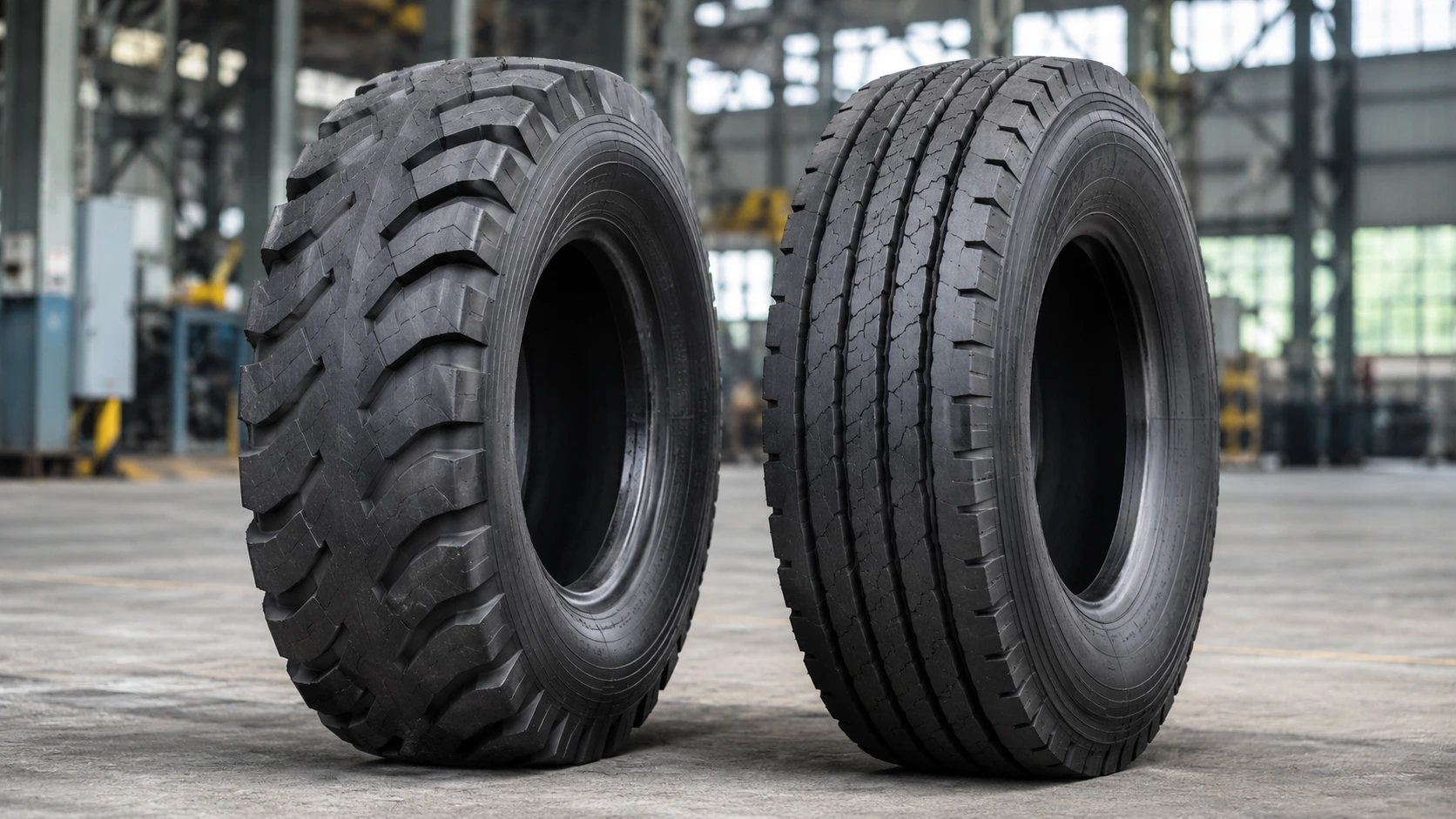
Choosing the right truck tyre is not simply a matter of comparing prices. For tyre importers and distributors, the decision between nylon (bias-ply) and radial truck tyres affects product positioning, operating suitability, customer satisfaction and overall sourcing costs.
Both tyre types serve important roles in commercial transport. The right option depends on the road conditions, vehicle application, operating loads, expected mileage and budget of the end customer.
For importers sourcing from manufacturers, understanding these differences helps build a product range that meets local market demand rather than relying on a one-size-fits-all approach.
1. What Are Nylon Truck Tyres?
Nylon truck tyres are commonly associated with bias-ply tyre construction. In this design, the casing cords run diagonally across the tyre, with successive plies arranged at alternating angles.
This construction creates a relatively rigid casing and strong sidewall structure. Depending on the tyre specification, it can be suitable for demanding operating conditions, including certain rough-road, mixed-terrain and heavy-load applications.
Nylon bias-ply truck tyres can be attractive to buyers who prioritise:
- Competitive initial purchase cost.
- Robust construction for suitable operating conditions.
- Applications involving rough roads or lower-speed operation.
- Value-focused replacement markets.
- Specific vehicle types for which bias-ply tyres are already widely used.
However, performance depends on the actual tyre design, load rating, inflation pressure, compound, speed and operating environment. Nylon construction alone does not guarantee superior durability.
2. What Are Radial Truck Tyres?
Radial truck tyres use casing cords arranged approximately perpendicular to the direction of travel, with belt layers beneath the tread providing reinforcement.
Many commercial radial tyres use steel belts. This construction allows the sidewall and tread area to perform more independently than in a typical bias-ply design.
Radial truck tyres are commonly selected for applications where buyers prioritise:
- Long-distance highway transport.
- Lower rolling resistance and fuel efficiency.
- Higher mileage potential in suitable applications.
- Improved ride comfort.
- Stable performance during sustained road operation.
The final result depends on tyre quality, tread design, vehicle condition, load, inflation pressure and maintenance. Not every radial tyre will outperform every bias-ply tyre in every operating condition.
3. Nylon vs Radial Truck Tyres: Key Differences
| Comparison factor | Nylon / Bias-ply | Radial |
|---|---|---|
| Casing construction | Diagonal cord plies | Radial cord arrangement |
| Sidewall characteristics | Generally more rigid | Generally more flexible |
| Initial purchase cost | Often lower | Often higher |
| Rolling resistance | Generally higher | Generally lower |
| Fuel efficiency | May be less favourable in comparable highway applications | Often advantageous in highway applications |
| Ride comfort | Generally firmer | Generally smoother |
| Highway suitability | Depends on specification and operating conditions | Commonly preferred for long-distance transport |
| Rough-road suitability | Can be suitable for specified applications | Also available in designs intended for rough or mixed terrain |
| Maintenance requirements | Correct load and inflation remain essential | Correct load and inflation remain essential |
| Best buying approach | Match construction to application and budget | Match construction to mileage and operating requirements |
These are general tendencies, not universal rules. Compare tyres with equivalent load ratings, dimensions, speed ratings and intended applications before making a purchasing decision.
4. Which Tyre Type Is Better for Your Market?
The most suitable product depends on how trucks are used in your target market.
Nylon truck tyres may be worth considering when:
- Your customers prioritise a lower initial purchase price.
- Vehicles operate on rough roads or in demanding mixed conditions.
- Local fleets already use bias-ply tyres for specific applications.
- Buyers need an economical replacement option.
- The intended vehicle and operating conditions match the tyre's technical specification.
Radial truck tyres may be worth considering when:
- Customers operate primarily on highways.
- Vehicles cover long distances regularly.
- Fuel consumption and rolling resistance are major purchasing considerations.
- Fleet operators evaluate total cost per kilometre rather than purchase price alone.
- The application benefits from the ride and handling characteristics of radial construction.
For importers: avoid treating either construction as universally superior. A distributor serving long-distance highway fleets may need a different product mix from one supplying vehicles working on rough roads, construction sites or regional transport routes.
5. Initial Purchase Price vs Total Cost of Ownership
One of the most important decisions for a tyre importer is whether to focus on the purchase price or the total operating cost
A lower-priced tyre may provide an advantage when customers have strict purchasing budgets. A higher-priced tyre may justify its cost if it delivers better mileage, lower fuel consumption or fewer operating interruptions in the intended application.
A useful comparison is:
Cost per kilometre = Total tyre-related cost ÷ Total kilometres achieved
For a meaningful comparison, consider:
- Purchase price.
- Expected service life.
- Retread potential, where applicable.
- Fuel consumption differences.
- Downtime and replacement frequency.
- Load, speed and road conditions.
- Warranty terms and after-sales support.
Use actual fleet data wherever possible. Avoid promising a specific fuel saving or mileage advantage without comparative test results under comparable operating conditions.
6. What Should Importers Check Before Buying?
Before placing an order, evaluate the following points with your supplier.
Tyre size and specification
Confirm the exact size, load index, speed rating and intended application.
Construction Type
Specify whether you require nylon bias-ply or radial tyres. Do not assume the construction from the size alone.
Operating Conditions
Share the typical road surfaces, load levels, speeds and distances covered by your customers.
Tread Pattern and Application
Check whether the pattern is suitable for steering, drive or trailer use, where relevant.
Commercial Terms
Compare pricing, minimum order quantities, lead times, packaging, payment terms and shipping
arrangements.
Quality Documentation
Request applicable technical specifications, test documentation and warranty conditions for the products being considered.
7. Why Work With a Truck Tyre Manufacturer?
For importers, sourcing directly from a manufacturer can help simplify communication around product specifications, order planning, pricing and supply requirements.
When evaluating a manufacturing partner, look beyond the quotation. Consider product consistency, technical support, export experience, order flexibility and the supplier's ability to serve your target market.
At Safeway Tyre, we work with international buyers seeking tyre supply solutions for their respective markets. Our product range includes truck and bus tyres alongside other commercial and specialty tyre categories.
The right product selection begins with understanding your customers' vehicles, operating conditions and price expectations.
Frequently Asked Questions
1. Are nylon truck tyres the same as bias-ply tyres?
The terms are often used together in commercial tyre discussions because nylon cords are commonly used in bias-ply construction. However, nylon describes a cord material, while bias-ply describes the tyre's construction. Confirm the actual construction and materials from the manufacturer's specification.
2. Are radial truck tyres always better than nylon tyres?
No. Radial tyres often offer advantages for long-distance highway operation, including lower rolling resistance and improved ride comfort. Bias-ply tyres can remain appropriate for certain applications where purchase cost, casing characteristics and local operating conditions matter more.
3. Which truck tyres are more economical?
The answer depends on whether you mean initial purchase price or total operating cost. Bias-ply tyres often have a lower upfront cost, while a suitable radial tyre may offer operating-cost advantages in some applications. Compare equivalent specifications and real operating data.
4. Can importers order nylon truck tyres directly from India?
Importers can approach Indian tyre manufacturers and exporters for product specifications, pricing and export terms. Availability depends on the manufacturer, requested sizes, construction, order quantity and destination-market requirements.
5. What information should I send to request a quotation?
Share your required sizes, construction type, quantity per size, intended application, destination country or port, and any applicable certification or branding requirements. This allows the supplier to evaluate your requirements more accurately.
Looking for Truck Tyres for Your Market?
Safeway Tyre works with international importers and distributors seeking commercial tyre supply solutions.
If you are evaluating nylon truck tyres for your market, share your required sizes, estimated quantities and destination. Our team can review your requirements and advise on available products and quotation options.